Face ID Repair Tools Explained: What Adapters, Programmers and Repair Boards Actually Do
Face ID faults can be among the more frustrating problems a mobile phone repair technician encounters. A phone may have a damaged front sensor assembly, a faulty flex cable, liquid damage or a problem affecting one of the components involved in the Face ID system.
Unlike an ordinary screen or battery replacement, Face ID repair can involve components that are closely tied to the phone’s security architecture. That means having the right tools matters — but understanding their limitations matters just as much.
So, what are Face ID repair tools? What do adapters, programmers and repair boards actually do? And what should a technician consider before investing in this specialist equipment?
This guide explains the main tool categories, their roles and the considerations that matter when building a professional mobile phone repair workshop.
What are Face ID repair tools?
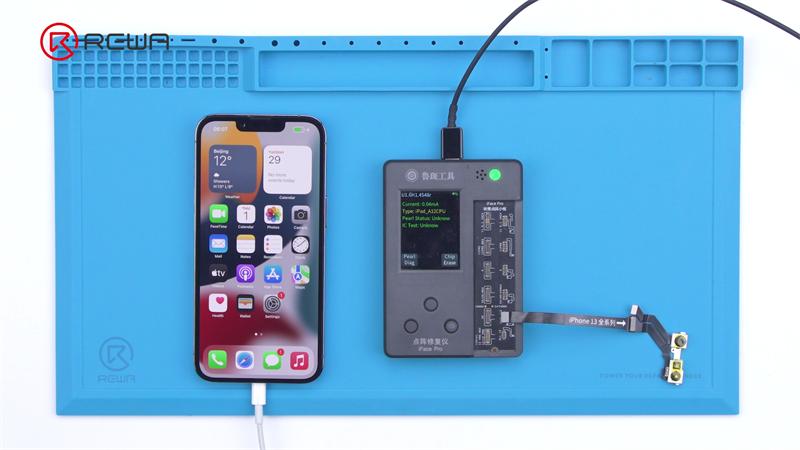
Face ID repair tools are specialist adapters, programmers, test fixtures and repair boards used by trained technicians to assist with diagnosing or servicing components associated with a phone’s facial recognition system.
Depending on the device model and the tool, they may help with:
- Testing compatible sensor assemblies and flex connections.
- Inspecting or diagnosing faults in supported components.
- Connecting specific modules to a compatible repair fixture.
- Supporting authorised component-level repair procedures.
- Checking whether a fault is associated with a particular assembly or connection.
These tools are not universal. Compatibility depends on the phone model, component revision, repair method and the capabilities of the equipment.
Most importantly, owning a Face ID programmer does not automatically mean a technician can restore Face ID on every device.
1. Face ID adapters: What are they used for?
A Face ID adapter is an interface designed to connect a supported component or flex assembly to a compatible testing or repair setup.
In practical terms, adapters help bridge the connection between a device component and the equipment used to inspect or service it.
Their role depends on the particular product. Some are designed for specific model families or component types, while others form part of a larger repair-board setup.
What to check before buying an adapter
Before purchasing one, consider:
- Model compatibility: Which exact phone models and generations does it support?
- Component compatibility: Is it intended for a particular sensor, flex or assembly?
- Equipment compatibility: Does it require a particular programmer or repair board?
- Documentation: Does the manufacturer provide clear connection and usage guidance?
- Software support: Does it require an application, firmware or a specific operating environment?
Avoid buying an adapter simply because its packaging says it supports Face ID. Ask for the supported model list and confirm that it matches the work you intend to perform.
2. Face ID programmers: What do they actually do?
A programmer is a specialist electronic tool designed to communicate with supported components or devices and perform specific authorised service operations.
In mobile phone repair, programmers are often discussed alongside component diagnostics, data handling and supported repair workflows.
However, the term Face ID programmer is used broadly in the repair-tool market. Different products can have very different capabilities.
One programmer may support a limited set of components or models, while another may require additional adapters or software.
Questions to ask before investing
Do not judge a programmer by the number of functions printed on its box. Check:
- Which exact models and component revisions are supported?
- What operations does the manufacturer officially document?
- Are additional adapters or repair boards required?
- Are software updates included, and how are they delivered?
- Does the tool have reliable technical support?
- Are there limitations that could affect the repairs you accept?
A professional technician should also understand the difference between diagnosing a component fault and restoring a security-sensitive function. A programmer cannot guarantee that a damaged or incompatible component will work again.
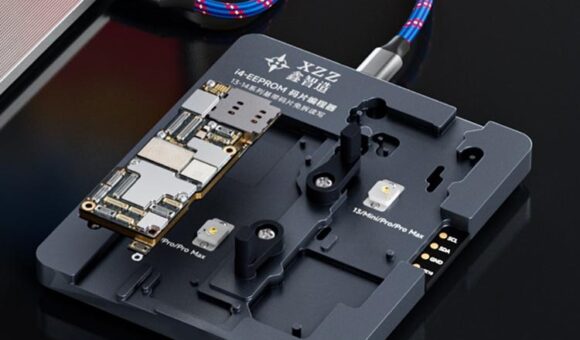
3. Face ID repair boards and test fixtures
A repair board or test fixture provides a structured connection point for supported components during diagnosis or authorised servicing.
These boards can make specialist work more organised by providing the connections required by a particular repair workflow.
Depending on the design, a board may be intended for:
- Testing supported components outside their normal installation position.
- Connecting compatible flex assemblies.
- Working with a specific programmer or adapter.
- Supporting model-specific diagnostic procedures.
What makes a useful repair board?
Look for a clearly documented model range, labelled connections, build quality and compatibility with the other equipment you already own.
Also check whether the board is a complete solution or only one part of a larger setup. Some fixtures require separate adapters, cables or programming equipment.
A cheap board that cannot communicate with your existing equipment may end up costing more than a compatible, properly documented setup.
4. Why Face ID tool compatibility matters
Face ID repair is not a one-size-fits-all process.
Different phone generations can use different component layouts, flex arrangements and repair requirements. Even products advertised for the same broad phone family may support different model numbers or component revisions.
Before buying any specialist tool, establish:
- The exact device model.
- The component or assembly being investigated.
- The tool’s supported model and revision list.
- Any required companion equipment.
- The manufacturer’s documented repair procedure.
Do not assume that an adapter designed for one model will work on another simply because the connectors appear similar.
5. Can Face ID always be repaired with a programmer?
No. A programmer is not a universal solution for Face ID faults.
A Face ID problem can result from physical damage, liquid exposure, damaged flex connections, defective components, board-level faults or other device-specific issues.
A tool may help with a supported diagnostic or service operation, but it cannot reverse every form of physical damage or guarantee that a security-sensitive function will be restored.
Some components and procedures are also subject to device-specific security restrictions. Technicians should follow authorised manufacturer or service procedures, obtain customer consent and avoid attempting to bypass authentication or defeat device protections.
The correct approach is to diagnose the fault first, establish what repair is supported and only then choose the equipment required.
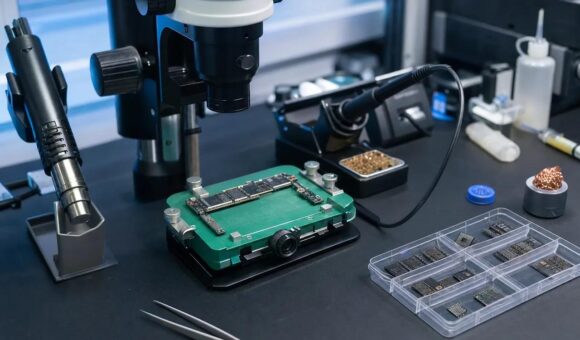
6. What other equipment supports specialist Face ID work?
Face ID tools are only one part of a capable motherboard repair setup.
Depending on the fault and the authorised procedure, a technician may also need:
- Stereo microscope: For inspecting small components, connectors and visible board damage.
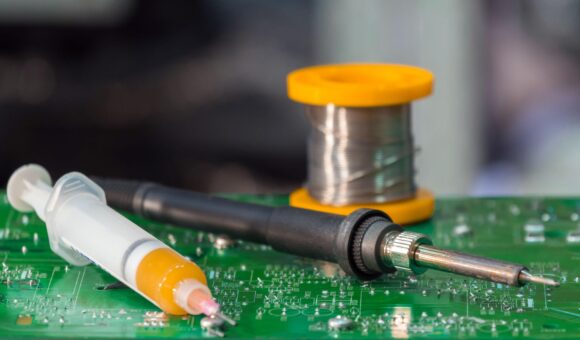
- Soldering station: For supported precision soldering work.
- Hot air rework station: For appropriate component-level rework, using controlled heat and model-specific procedures.
- DC power supply: For controlled electrical testing where the device’s service procedure permits it.
- Digital multimeter: For checking continuity, voltage and other electrical conditions.
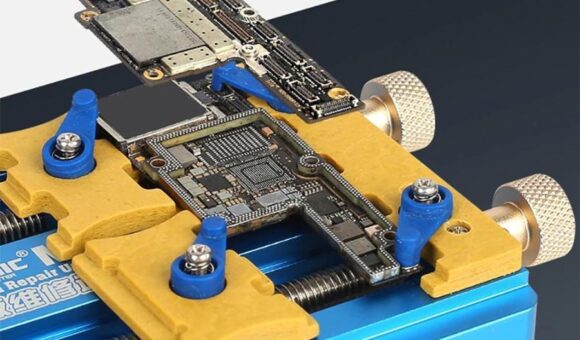
- PCB holder: For keeping a motherboard stable during inspection and repair.
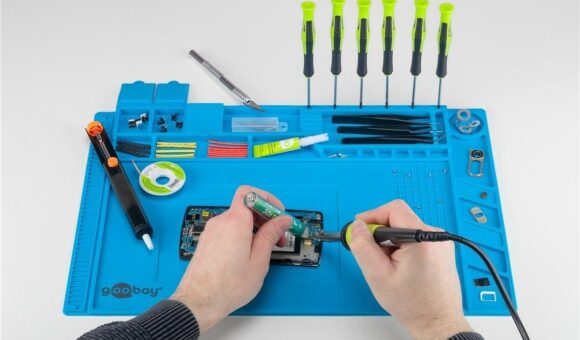
- Soldering mat: For organising the work area and protecting the bench surface.
Each tool has a different role. A microscope helps you see the work clearly; a multimeter helps you investigate electrical conditions; and a soldering station supports appropriate soldering tasks.
For a broader overview, read our guide to setting up a professional mobile phone motherboard repair bench.
You may also find these guides useful:
- Best microscopes for mobile phone motherboard repair
- Stereo vs digital microscopes for phone repair
- How much microscope magnification do you need for micro-soldering?
- How to choose a soldering station for motherboard repair
- How to choose a hot air rework station
7. Should every mobile phone repair shop invest in Face ID tools?
Not necessarily.
Face ID repair equipment is specialist equipment. It makes more sense for a workshop that regularly handles compatible devices and has technicians trained to perform the relevant diagnostic and repair procedures.
A new repair business may get more value initially from essential equipment such as a quality multimeter, soldering station, hot air station, microscope and reliable PCB holder.
As the workshop develops and begins receiving more specialist motherboard and sensor-related work, investing in additional equipment becomes easier to justify.
If you are still building your workshop, start with our guide to essential tools for starting a mobile phone repair business in Kenya.
8. Where can technicians buy Face ID repair tools in Kenya?
When sourcing specialist mobile phone repair equipment in Kenya, compatibility and after-sales support should be part of the buying decision.
Before purchasing a Face ID adapter, programmer or repair board, confirm the exact models supported, what the tool can do, whether additional equipment is needed and whether technical documentation is available.
Mutesh Ventures Ltd supplies mobile phone repair tools and workshop equipment in Nairobi CBD. You can explore the Mutesh Ventures catalogue or contact the team to enquire about the availability and compatibility of specialist repair equipment.
Mutesh Ventures Ltd
Accra Towers, 7th Floor, Shop D3
Kenneth Matiba Road, Nairobi CBD, Kenya
Phone: 0724 946 622
Email: contact@muteshventures.com
Frequently Asked Questions
What is a Face ID repair adapter?
It is a specialist interface used to connect supported Face ID-related components to compatible diagnostic or repair equipment. Its capabilities depend on the model and product.
What is a Face ID programmer used for?
A programmer communicates with supported electronic components or devices to perform documented operations. Different programmers support different models and functions, so their specifications should be checked before purchase.
What is a Face ID repair board?
A repair board or test fixture provides connections for supported components during testing or authorised repair procedures. Some require a separate programmer or adapter.
Can a Face ID programmer fix every Face ID problem?
No. A programmer cannot guarantee recovery from physical damage, defective components, incompatible parts or every security-related fault.
Are Face ID adapters universal?
No. Adapters are generally model- and component-specific. Always check the manufacturer’s compatibility information.
What equipment does a technician need for specialist Face ID work?
The requirements depend on the device and repair procedure. A workshop may need a compatible adapter or fixture alongside general diagnostic equipment such as a microscope, multimeter and suitable soldering tools.
Is Face ID repair suitable for beginners?
Face ID-related work can involve delicate components and device-specific security considerations. Beginners should first develop strong diagnostic and micro-soldering skills, use documented procedures and seek appropriate training before accepting specialist repairs.
Final thoughts
Face ID repair is a specialist area where the right equipment must be matched to the right device and repair procedure.
Adapters, programmers and repair boards each have different roles. Before investing, check compatibility, understand the documented capabilities and make sure the equipment fits the type of work your workshop actually handles.
For mobile phone repair technicians in Nairobi and across Kenya, Mutesh Ventures Ltd is a place to explore workshop equipment and enquire about specialist tools.
Visit Mutesh Ventures or call 0724 946 622 to enquire.
Add a review
Your email address will not be published. Required fields are marked *