

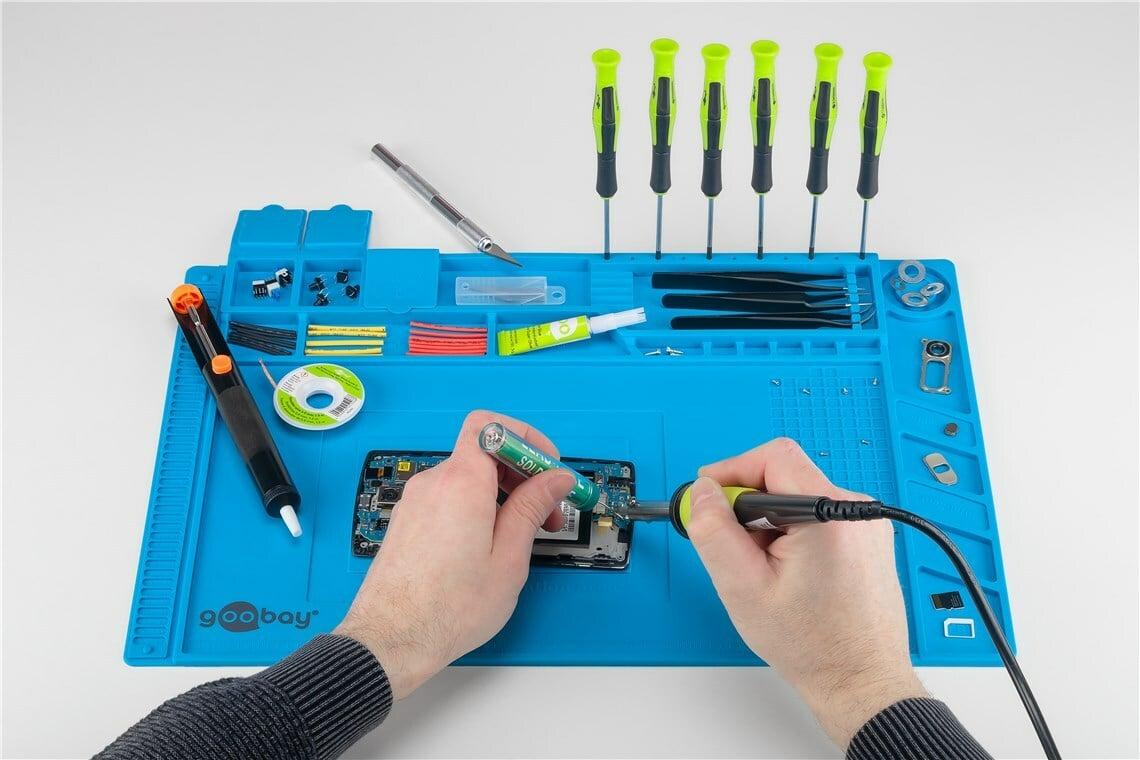
The Repair Bench Upgrade You Shouldn’t Ignore: Choosing the Right Soldering Mat
A soldering station gets the attention. A microscope looks impressive. A hot air rework machine makes your workshop look more capable.
But there’s another piece of equipment that quietly supports almost every repair: the soldering mat.
It sits underneath your work, provides a defined surface for handling devices and tools, and can help keep small components organised. A suitable mat also needs to withstand the conditions of your repair process.
For mobile phone repair technicians, choosing the right mat is about more than appearance. Size, material, heat resistance, organisation and electrostatic-discharge protection all deserve consideration.
Whether you’re setting up a new workshop in Nairobi or upgrading an existing repair bench, here’s what to look for.
What is a soldering mat?
A soldering mat is a protective work surface used during electronics repair and soldering.
Many phone repair mats are made from silicone or other materials designed to tolerate the heat encountered during common repair tasks. Some include compartments, grooves and designated areas for storing screws, components and small accessories.
Depending on the product, a soldering mat may help you:
- Organise small components and screws.
- Keep frequently used tools within reach.
- Provide a defined surface for repair work.
- Protect the underlying bench from suitable heat exposure.
- Keep the immediate workstation more organised.
However, not all mats offer the same features. A silicone mat, an ESD-safe mat and a general-purpose work mat should not automatically be treated as equivalent.
1. Heat resistance: the first thing to check
Phone repair involves heated tools, soldering irons and hot air equipment. Your work surface should be suitable for the temperatures and conditions it will encounter.
Many electronics repair mats are designed with heat resistance in mind, but the actual temperature rating varies by product.
Before buying, check:
- The manufacturer’s stated temperature rating.
- Whether the rating refers to continuous or intermittent exposure.
- Whether the material is suitable for soldering and rework activities.
- Any limitations on direct contact with hot tools.
A heat-resistant mat is not permission to leave a hot soldering iron or hot air handpiece resting on it.
Always use the appropriate tool stand and follow the manufacturer’s safety instructions.
2. Material: silicone isn’t the whole story
Silicone is a common material used in mobile phone repair mats because it can offer flexibility, convenient cleaning and useful heat resistance.
But the material name alone does not tell you everything about the product’s suitability.
Consider:
Flexibility: A flexible mat can be convenient to position and store.
Surface texture: The texture should support your working style without making small parts difficult to handle.
Cleaning: Flux residues, dust and other workshop contamination should be removable using cleaning methods approved by the manufacturer.
Durability: The mat should maintain its shape and condition with normal workshop use.
Heat rating: Check the actual specification rather than assuming every silicone mat has the same temperature tolerance.
3. Compartments and grooves: small details that save time
One of the most useful features of many phone repair mats is their built-in organisation.
You may find compartments for screws, grooves for small components and designated areas for accessories.
This can make a difference when dismantling a phone with multiple screws and delicate parts.
Look for:
- Small screw compartments.
- Separate sections for components.
- Grooves for organising accessories.
- Enough space for the device being repaired.
- A layout that does not interfere with your tools.
A mat with many compartments is not necessarily better. Choose one whose layout matches how you work.
4. Size: will it fit your actual workstation?
A mat should provide enough room for the device, the tools you are using and the repair procedure.
A very small mat may restrict movement, while an oversized one may take up valuable bench space.
Before purchasing, consider:
- Your available workbench dimensions.
- The size of the phones you commonly repair.
- Whether you perform motherboard-level work.
- The space occupied by your microscope and other equipment.
- Whether you need a separate area for disassembly and soldering.
If you regularly work on smartphone motherboards, choose a surface that gives you enough room to position the board, holder and supporting tools comfortably.
5. ESD protection: don’t confuse it with heat resistance
This is an important distinction.
Electrostatic discharge (ESD) can damage sensitive electronic components. An ESD-control mat is designed to form part of a suitable electrostatic-control system.
A mat that is heat-resistant or made from silicone is not automatically ESD-safe.
If ESD protection is required for your workstation, check the product’s specifications and whether it is designed to work with appropriate grounding and other ESD-control measures.
Depending on the mat and the intended system, relevant considerations may include:
- Surface resistance specifications.
- Grounding arrangements.
- Compatibility with an ESD wrist strap.
- Proper grounding connections.
- Manufacturer guidance for use and maintenance.
Do not rely on appearance or material alone to determine whether a mat provides electrostatic protection.
6. Magnetic areas: useful, but not essential
Some repair mats include magnetic sections or accessories designed to help keep small metal parts in place.
These features can be convenient when handling screws and other small components.
However, magnetic sections are not a substitute for proper component organisation. You should still keep screws and parts separated according to the device and repair stage.
If a mat includes magnetic areas, consider whether they are positioned conveniently and whether they suit the parts you handle.
7. How to choose a soldering mat for different repair tasks
The right mat depends on the work you perform.
| Repair activity | What to prioritise |
|---|---|
| Screen and battery replacement | Suitable surface, useful compartments and enough working space |
| Phone disassembly | Screw organisation and a convenient layout |
| Motherboard repair | Adequate space for the board, holder and supporting tools |
| Micro-soldering | Suitable heat rating, stable layout and compatibility with your ESD arrangements |
| General workshop use | Durability, easy cleaning and appropriate dimensions |
A mat designed for general phone disassembly may not provide every feature required by a technician performing frequent motherboard rework.
Match the product to the actual demands of your workshop.
8. Common mistakes when buying a soldering mat
A few purchasing mistakes can leave you with a mat that looks useful but does not suit your work.
Assuming all silicone mats are ESD-safe: Material alone does not establish electrostatic protection.
Ignoring the temperature rating: Different products have different heat limitations.
Buying the wrong size: A mat that is too small can restrict your working area.
Choosing compartments over usability: A complicated layout is not useful if it gets in the way.
Using the mat as a tool stand: Hot soldering irons and hot air handpieces should be placed in appropriate stands.
Ignoring cleaning instructions: Some cleaning chemicals or methods may damage the material.
A good mat should support your workflow rather than introduce another inconvenience.
9. How to maintain your repair mat
Even a durable repair mat needs proper care.
A simple maintenance routine helps keep the surface usable.
- Remove loose dust and small components after repairs.
- Clean flux residues using a method approved by the manufacturer.
- Avoid unsuitable solvents and aggressive cleaning materials.
- Inspect the mat for cuts, tears and deterioration.
- Keep it away from unnecessary heat exposure.
- Store it according to the manufacturer’s instructions.
If the mat forms part of an ESD-control system, follow the manufacturer’s testing and maintenance recommendations rather than relying on visual inspection alone.
10. What equipment should accompany your soldering mat?
A soldering mat works best as part of an organised repair workstation.
Consider combining it with:
Soldering station: Provides controlled heat for suitable soldering tasks. See our guide to choosing a soldering station for mobile phone motherboard repair.
Hot air rework station: Supports suitable surface-mount component removal and installation. Learn how to choose a hot air rework station.
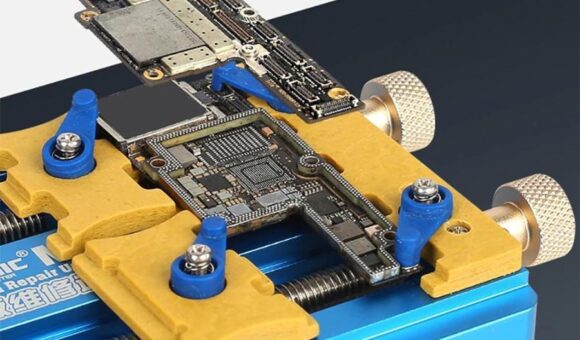
PCB holder: Keeps the motherboard stable during inspection and precision work. Read how to choose the right PCB holder.
Microscope: Helps you inspect small components and solder joints. Explore our guide to microscopes for mobile phone motherboard repair.
Flux and solder wire: Essential consumables for many soldering procedures. Understand the difference between flux, solder wire and solder paste.
The aim is to create a workspace where equipment, materials and tools are easy to access without overcrowding the bench.
Where can you buy mobile phone repair mats and workstation accessories in Nairobi?
If you’re upgrading your repair bench, Mutesh Ventures Ltd supplies mobile phone repair tools and equipment in Nairobi, Kenya.
Explore the Mutesh Ventures catalogue or contact the team to enquire about available soldering mats, holders, workstation accessories and other repair equipment.
When making an enquiry, explain whether you need a general repair mat, a heat-resistant soldering mat or an ESD-control mat. These are different requirements, and the product specifications should match your intended use.
Mutesh Ventures Ltd
Accra Towers, 7th Floor, Shop D3, Kenneth Matiba Road, Nairobi CBD, Kenya.
Phone: 0724 946 622
Email: contact@muteshventures.com
Frequently asked questions
What is a soldering mat used for in phone repair?
A soldering mat provides a defined work surface for phone repair. Depending on its design, it can help organise screws and components, protect the bench from suitable heat exposure and keep frequently used accessories accessible.
Are silicone soldering mats heat-resistant?
Many silicone repair mats are designed to tolerate heat, but their temperature ratings vary. Check the manufacturer’s specifications before using a particular mat with soldering or rework equipment.
Is a silicone soldering mat ESD-safe?
Not automatically. Heat resistance and electrostatic protection are different properties. Check the product’s ESD specifications if you need it to form part of an electrostatic-control workstation.
What size soldering mat should I buy?
Choose a size that accommodates your phone, motherboard, tools and normal repair movements while fitting comfortably on your workbench.
Can I place a hot soldering iron directly on a soldering mat?
You should use the appropriate soldering iron stand. A heat-resistant mat is not a substitute for a properly designed tool holder.
How do I clean a phone repair mat?
Follow the manufacturer’s cleaning instructions. Remove loose debris regularly and use suitable cleaning materials that will not damage the mat.
Do motherboard repair technicians need an ESD mat?
ESD control is an important consideration when handling sensitive electronics. The appropriate mat and grounding arrangement depend on the workstation’s ESD-control requirements.
Give your repair bench a better foundation
A soldering mat may not be the most expensive tool in your workshop, but it plays an important supporting role.
The right one gives you a suitable working surface, helps organise small parts and makes your everyday repair routine more manageable.
Choose according to the work you perform. Check the heat rating, dimensions, organisation features and ESD specifications rather than assuming every repair mat offers the same protection.
For mobile phone repair tools and workstation accessories in Nairobi, visit Mutesh Ventures or contact the team.
Mutesh Ventures Ltd
Accra Towers, 7th Floor, Shop D3, Kenneth Matiba Road, Nairobi CBD, Kenya.
Phone: 0724 946 622
Email: contact@muteshventures.com

Add a review
Your email address will not be published. Required fields are marked *