

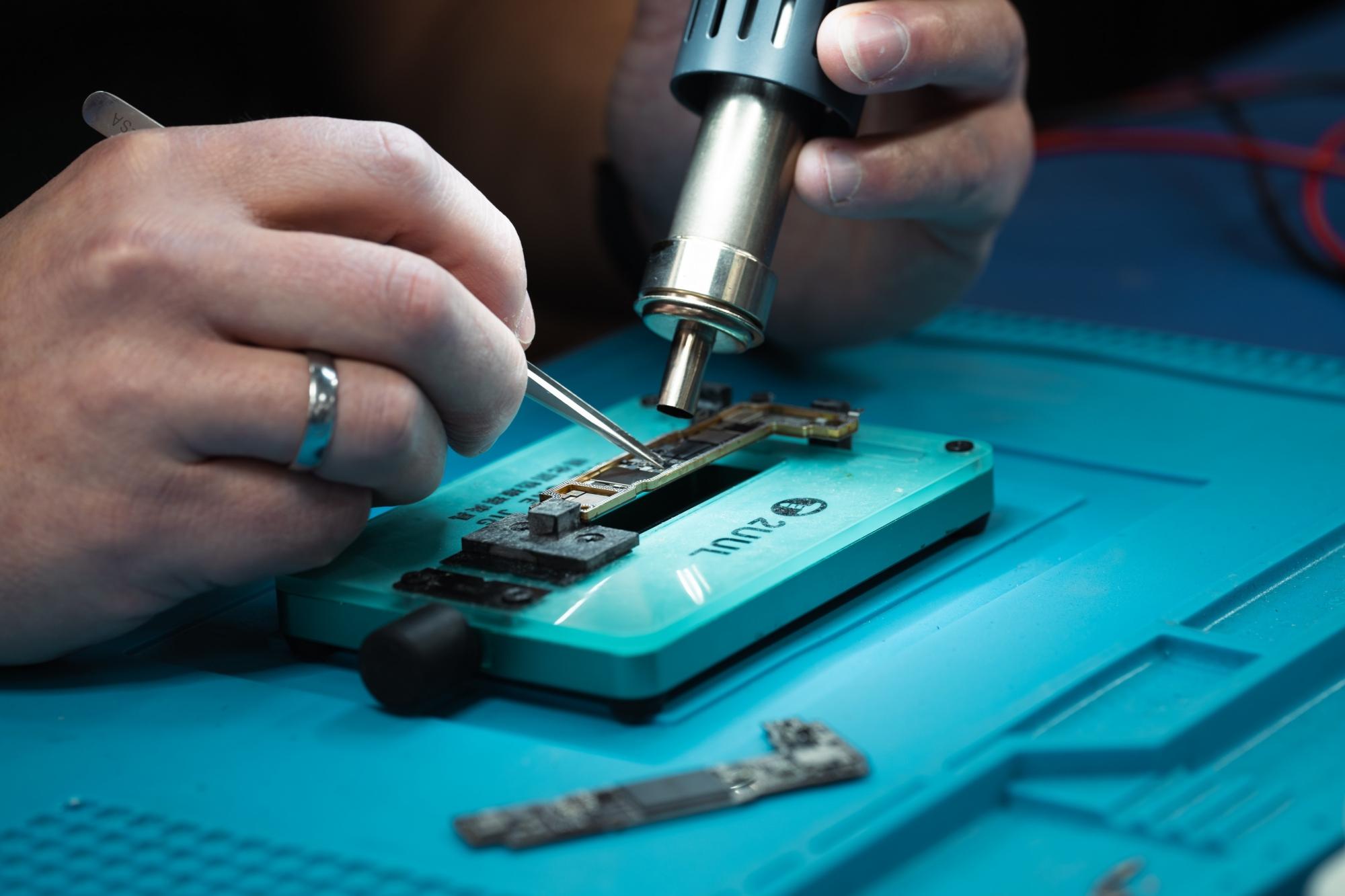
Hot Air Rework Station for Phone Motherboard Repair
A hot air rework station is an important tool for mobile phone technicians who work on circuit boards and surface-mounted components.
Unlike a conventional soldering iron, which transfers heat through direct contact with a metal tip, a hot air station directs heated air onto a component and its surrounding solder connections. This makes it useful for removing and installing many types of surface-mounted components.
But not every hot air station is suitable for every repair job.
If you’re buying one for your phone repair workshop, pay attention to temperature control, airflow adjustment, nozzle compatibility, handpiece design and replacement-part availability.
This guide explains what matters, what to avoid and how to choose equipment that matches your repair work.
What is a hot air rework station used for in phone repair?
A hot air rework station heats soldered electronic components so they can be removed, repositioned or installed without using a conventional soldering iron tip as the primary heat source.
In mobile phone repair, technicians commonly use hot air equipment for:
- Removing and replacing suitable surface-mounted components.
- Reworking certain motherboard ICs.
- Heating solder around selected connectors.
- Removing components during motherboard troubleshooting.
- Performing controlled heating tasks during electronics repair.
The exact application depends on the component, board design, solder type and repair procedure.
A hot air station does not automatically make every motherboard repair possible. Some jobs require additional equipment, specialised techniques and considerable experience.
1. Temperature control: one of the most important features
Temperature control determines how much heat the station produces.
Different components and repair procedures require different heating conditions. A technician working on a small component will not necessarily use the same settings as someone removing a larger component.
Look for a station that offers:
- Adjustable temperature settings.
- A clear digital temperature display.
- Consistent temperature performance.
- A reliable temperature sensor.
- Temperature checking or calibration support where available.
A higher maximum temperature does not automatically make a station better.
What matters is whether you can control the heat appropriately for the task.
Buying tip: Check the manufacturer’s temperature range and accuracy specifications rather than relying only on the number displayed on the front panel.
2. Airflow control: why it matters
Airflow determines how strongly heated air is delivered through the nozzle.
This is particularly important when working on mobile phone motherboards because small electronic components are often positioned close together.
Too much airflow can disturb nearby components, while insufficient airflow may make it difficult to transfer enough heat to the target area.
A good hot air station should allow you to adjust airflow to suit the job.
Before purchasing, check:
- Whether airflow is adjustable.
- Whether the controls are easy to use.
- Whether airflow remains reasonably consistent.
- Whether the station is designed for the type of work you intend to perform.
Temperature and airflow work together. Choosing an appropriate temperature without considering airflow can still produce poor results.
3. Nozzle selection and compatibility
The nozzle directs hot air towards the work area.
Different nozzle sizes and shapes are useful for different components and board layouts.
For example:
- Smaller nozzles can help concentrate heat on smaller target areas.
- Larger nozzles distribute heat across a wider area.
- Special-shaped nozzles may suit particular component packages.
When buying a hot air station, check which nozzles are included and whether additional compatible sizes are available.
Do not assume that every nozzle fits every station. Confirm compatibility with the exact model before ordering accessories.
4. Heating performance and recovery
A hot air station needs to deliver heat consistently during a repair.
Its heating performance affects how effectively it reaches and maintains the selected working conditions.
Consider:
- How quickly the station reaches its selected temperature.
- Whether temperature remains stable during use.
- Whether it provides suitable airflow for the intended work.
- Whether the handpiece and heating element are designed for regular workshop use.
Avoid judging performance based on wattage alone. A higher power rating does not automatically guarantee better temperature control or more suitable airflow.
Compare the actual specifications and construction of the equipment.
5. Handpiece design and comfort
The handpiece is the part you hold while directing hot air towards the motherboard.
Its design matters, especially if you carry out repair work regularly.
Look for:
- A comfortable grip.
- A manageable weight.
- A flexible cable.
- A stable handpiece holder.
- A reliable connection to the main unit.
Some stations also include automatic standby or cooling functions when the handpiece is returned to its holder. These can be useful, but check how the specific model operates.
6. Safety and protection features
Hot air stations operate at high temperatures. Safe handling is essential.
Before purchasing, check for features such as:
- Overheating protection.
- Automatic cooling or standby functions.
- A stable handpiece holder.
- Appropriate electrical protection.
- Clear operating instructions.
Your workshop should also have suitable ventilation, a stable work surface and appropriate ESD protection.
Never direct hot air towards batteries or other heat-sensitive components without following the relevant manufacturer’s repair guidance. Damaged or swollen lithium-ion batteries require particular care and should not be heated.
7. Which hot air station should you buy?
The right choice depends on your experience, workload and the types of repairs you handle.
| Your repair needs | What to prioritise |
|---|---|
| Occasional electronics repairs | Reliable basic temperature and airflow adjustment |
| Regular mobile phone repairs | Stable heating, adjustable airflow and compatible nozzles |
| Motherboard-level repairs | Precise control, suitable handpiece and nozzle options |
| Advanced component rework | Consistent performance, accessory availability and serviceability |
For a technician just entering motherboard repair, it makes sense to start with equipment that offers essential controls and reliable support.
For a busy repair workshop, durability, replacement accessories and consistent daily performance become even more important.
You can browse the Mutesh Ventures range of mobile phone repair equipment to explore available machines and accessories.
8. Hot air rework station vs soldering station: do you need both?
Yes, if you intend to handle a broad range of motherboard repairs, both tools can be valuable.
They perform different functions.
A hot air rework station heats components using controlled airflow. A soldering station uses a heated metal tip to work directly on solder joints.
| Hot air rework station | Soldering station |
|---|---|
| Uses heated airflow | Uses a heated metal tip |
| Useful for removing and installing many SMD components | Useful for individual solder joints |
| Uses interchangeable nozzles | Uses interchangeable soldering tips |
| Requires temperature and airflow control | Requires temperature and tip selection |
Neither tool completely replaces the other.
For a closer comparison, read our guide to hot air rework stations vs soldering stations.
If you’re also considering a soldering station for motherboard work, our guide on choosing a soldering station for mobile phone motherboard repair explains the features worth comparing.
9. Common mistakes to avoid when buying a hot air station
Before spending money, watch out for these common mistakes.
Choosing based on wattage alone
Power rating is useful, but it does not tell you everything about temperature stability, airflow or overall performance.
Ignoring airflow adjustment
A station without suitable airflow control may limit the type of work you can comfortably perform.
Overlooking nozzle availability
Check whether compatible nozzles can be purchased separately. This is important if your repair work involves different component sizes.
Assuming every hot air station is suitable for motherboard work
Some equipment is intended for general electronics work. Check the manufacturer’s specifications and intended applications.
Ignoring replacement parts
A station may work well initially, but you should also consider the availability of replacement handpieces, heating elements and other accessories.
Buying more than your current work requires
Advanced equipment can be useful, but it should match your workload and experience rather than simply having the longest list of features.
10. Where to buy a hot air rework station in Nairobi, Kenya
Mutesh Ventures Ltd supplies mobile phone repair equipment and accessories in Nairobi, Kenya.
Its online store features hot air and rework equipment, including the Gordak 868D and Kailiwei 858D, alongside other tools for phone repair technicians.
You can explore the Mutesh Ventures online store to view available equipment and accessories.
For product enquiries, availability and assistance choosing a suitable machine, contact Mutesh Ventures.
Mutesh Ventures Ltd
Accra Towers, 7th Floor, Shop D3
Kenneth Matiba Road, Nairobi CBD, Kenya
Phone: 0724 946 622
Email: contact@muteshventures.com
Frequently asked questions
What is the best hot air rework station for mobile phone repair?
The best hot air rework station is one that provides reliable temperature control, adjustable airflow, suitable nozzles and dependable heating performance. The right model depends on your repair workload, experience and budget.
What temperature should I use for mobile phone motherboard repair?
There is no universal temperature for all motherboard repairs. The correct setting depends on the solder alloy, component, board construction, nozzle, airflow and repair procedure. Follow the component manufacturer’s guidance and use an appropriate controlled heating process.
What is the difference between a hot air station and a hot air gun?
A hot air rework station is designed for controlled electronics rework and typically offers adjustable temperature and airflow. A general-purpose hot air gun is usually designed for broader heating applications and may not provide the control required for delicate motherboard work.
Can a hot air rework station remove phone motherboard ICs?
Yes. A suitable hot air rework station can be used to remove many surface-mounted ICs, provided the technician uses the correct procedure, temperature, airflow and nozzle. Not every IC or board can be safely handled using the same settings.
Do I need a microscope when using a hot air station?
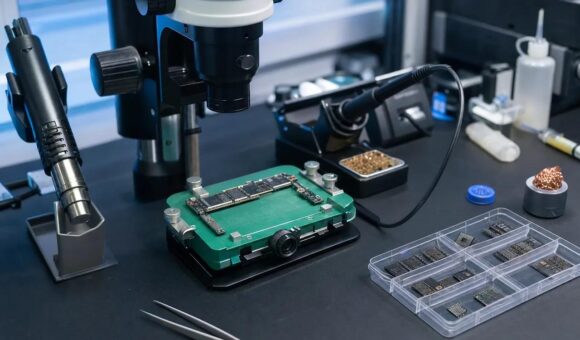
A microscope is not essential for every hot air task, but it is extremely useful for inspecting small components, solder joints and motherboard damage during precision repair work.
Can I use a hot air station for all soldering work?
No. A hot air station is useful for many surface-mounted component tasks, but a conventional soldering station is better suited to many direct-contact soldering jobs.
What should I check before buying a hot air rework station in Kenya?
Check temperature control, adjustable airflow, compatible nozzles, heating performance, safety features, replacement-part availability and whether the equipment is suitable for your intended repair work.
Final thoughts
Choosing a hot air rework station is not simply about finding the machine with the highest wattage or temperature range.
For mobile phone repair, what matters is controlled heating, adjustable airflow, suitable nozzles and reliable performance.
Understand the work you intend to perform, compare the specifications carefully and choose equipment that supports your workshop as it grows.
Explore mobile phone repair equipment at Mutesh Ventures, or contact the team in Nairobi for product enquiries.
Add a review
Your email address will not be published. Required fields are marked *