

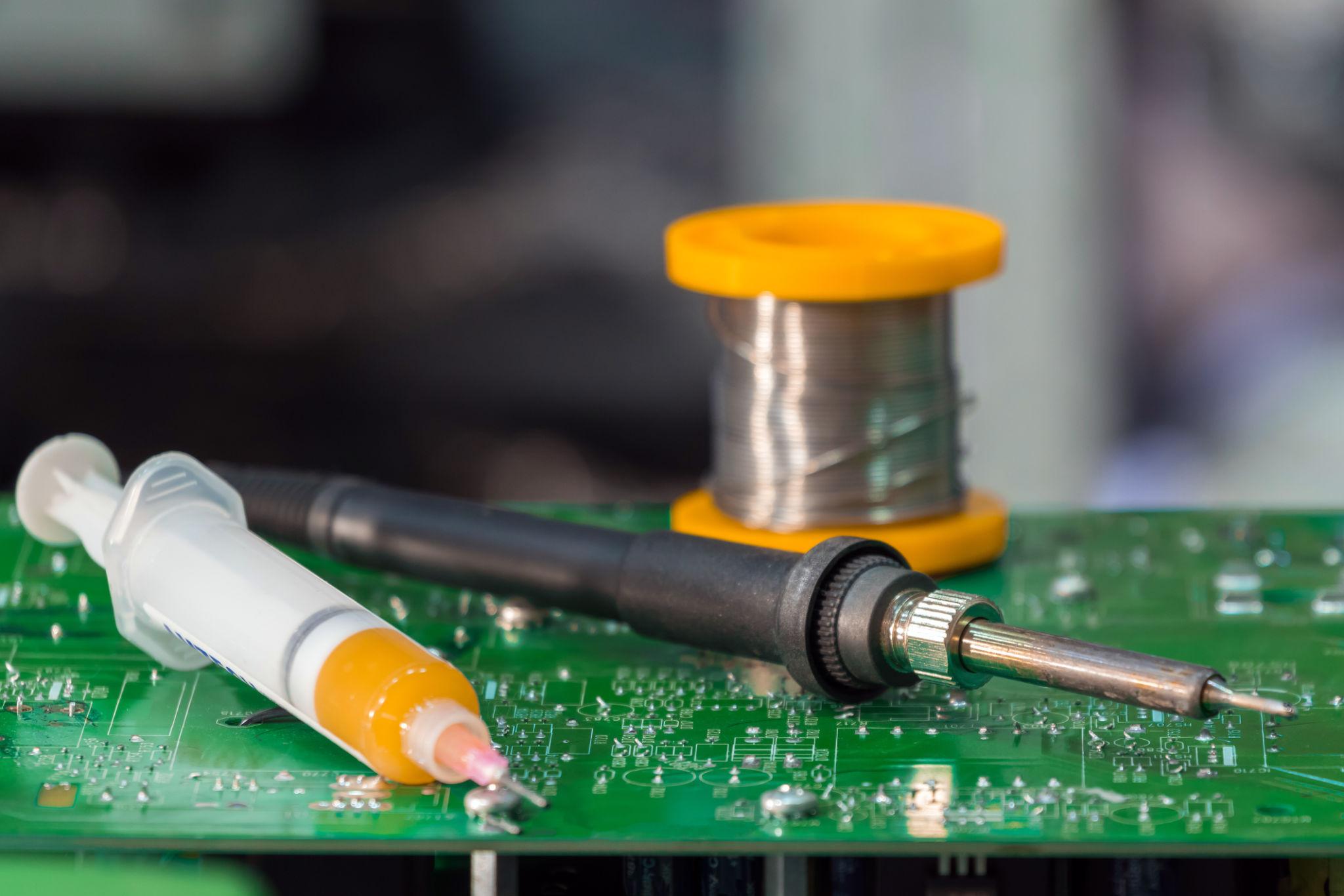
Flux, Solder Wire or Solder Paste? Know What Your Repair Job Actually Needs
Walk into a mobile phone repair workshop and you’ll probably find solder wire, flux and solder paste somewhere on the workbench. They are all used in soldering, but they do different jobs.
Using the wrong material can make a repair more difficult. Too little or unsuitable flux can affect solder wetting. The wrong solder wire diameter can make precise work frustrating. And solder paste needs to be handled and applied differently from ordinary solder wire.
If you’re learning micro-soldering or restocking your workshop, understanding these materials will help you choose the right consumables for the job.
Let’s break down what each one does, how they differ and what to consider before buying.
1. What is soldering flux?
Flux is a chemical preparation used during soldering to help the solder form a reliable connection.
Metal surfaces can develop oxide layers and other contamination that interfere with soldering. Suitable flux helps remove or disrupt these oxides and supports the wetting of the metal surface by molten solder.
In practical terms, flux helps solder flow and form a connection where it is intended to.
In mobile phone repair, flux is commonly used during tasks such as:
- Soldering small wires and connections.
- Working on suitable motherboard pads.
- Component replacement.
- Reworking solder joints.
- Removing and replacing certain surface-mount components.
What types of flux are used in electronics repair?
Flux comes in different formulations and classifications. Common options include:
Rosin-based flux: Used in electronics soldering and available in different activity levels and formulations.
No-clean flux: Designed to leave residues that, under specified conditions, do not normally require cleaning. Whether cleaning is appropriate still depends on the product and application.
Water-soluble flux: Requires appropriate cleaning after use. It should not be treated as a no-clean product.
Gel and paste flux: These consistencies can make application easier when working on small or targeted areas.
The important thing is to select flux intended for electronics work. Plumbing flux and other unsuitable formulations can be corrosive and should not be used on smartphone motherboards.
What should you look for when buying flux?
Consider these points:
- Intended use in electronics.
- Flux classification and activity level.
- Application method and consistency.
- Residue characteristics.
- Cleaning requirements.
- Manufacturer instructions.
For precision motherboard work, application control matters. You want to apply the appropriate amount to the working area rather than flooding the board unnecessarily.
2. What is solder wire?
Solder wire is a metal alloy supplied in wire form. It melts when heated and creates an electrical and mechanical connection between suitable metal surfaces.
It is one of the most familiar consumables in electronics repair.
Solder wire is used for tasks such as:
- Soldering wires.
- Repairing suitable solder joints.
- Adding solder to appropriate pads.
- Connecting electronic components.
- Supporting certain motherboard repair procedures.
Leaded vs lead-free solder wire
Two broad categories you’ll encounter are leaded and lead-free solder alloys.
Leaded solder: Commonly associated with tin-lead alloys such as Sn63/Pb37. It has a well-established melting behaviour and is used in some electronics repair environments.
Lead-free solder: Uses alternative alloy compositions, often based on tin combined with metals such as silver and copper. The exact melting behaviour depends on the alloy.
These materials are not identical. Their melting temperatures, handling characteristics and suitable working conditions differ.
Lead-containing solder requires appropriate precautions because of the health and environmental risks associated with lead. Wash your hands after handling it, avoid eating or drinking at the workstation and follow applicable safety requirements.
Why does solder wire diameter matter?
Solder wire is available in different diameters. The diameter you choose affects how much solder is delivered with each application.
For mobile phone repair, a thinner wire can make it easier to control the amount of solder used on small connections.
A thicker wire may be more convenient for larger joints and other applications where more solder is required.
There is no single diameter suitable for every repair. Choose according to the size of the connection, the technique and your level of control.
3. What is solder paste?
Solder paste is a mixture of finely divided solder alloy particles and flux in a paste-like form.
It is commonly used in surface-mount assembly and suitable rework procedures.
Unlike solder wire, which is fed into a heated joint, solder paste is applied to the required area before the soldering or reflow process.
Typical applications include:
- Surface-mount component assembly.
- Replacing suitable components.
- Reworking certain board-level connections.
- Applying solder to suitable pads through stencils.
What should you know before buying solder paste?
Solder paste is not simply solder wire in a different container.
Pay attention to:
- Alloy composition.
- Particle size or type.
- Flux formulation.
- Application method.
- Storage requirements.
- Expiry date and handling instructions.
Many solder pastes have specific storage and temperature requirements. Follow the manufacturer’s instructions to maintain product performance.
For precision work, also consider whether the paste is suitable for the components and process you’re performing.
4. Flux vs solder wire vs solder paste: what’s the difference?
Here is the simplest way to understand the three materials.
| Material | Main purpose | Typical form |
|---|---|---|
| Flux | Helps clean and prepare metal surfaces for soldering | Liquid, gel or paste |
| Solder wire | Supplies solder alloy to create a connection | Wire |
| Solder paste | Supplies solder alloy and flux in a paste for suitable applications | Paste |
The key distinction is that flux supports the soldering process, while solder wire and solder paste provide the solder alloy.
Solder paste contains flux as part of its formulation, but standalone flux and solder paste are not interchangeable products.
5. Can you use flux, solder wire and solder paste together?
Yes, depending on the repair procedure.
For example, a technician may use solder wire with a suitable flux during a soldering operation. In another application, solder paste may already contain the flux required for the process.
However, adding more flux is not automatically necessary whenever solder paste is used.
The correct materials and application method depend on the board, component, alloy and repair procedure.
Always follow the consumable manufacturer’s instructions and avoid mixing products without checking their compatibility.
6. Which soldering material should you use for different repair jobs?
Your choice depends on what you’re doing at the bench.
| Repair task | Material to consider | Why |
|---|---|---|
| Soldering suitable wires | Solder wire and appropriate flux | Provides solder alloy and supports wetting |
| Reworking a suitable solder joint | Appropriate solder wire and flux | Helps control the soldering process |
| Surface-mount assembly | Suitable solder paste | Allows controlled placement of solder alloy |
| Stencil-based solder application | Suitable solder paste | Supports application through stencil openings |
| Removing or replacing components | Materials specified for the rework procedure | Depends on component and board requirements |
This table is a general guide, not a substitute for model-specific repair procedures.
7. Why does flux quality matter in micro-soldering?
When working with tiny motherboard components, control is important.
A suitable flux helps solder wet the intended surfaces and supports more predictable soldering.
However, using more flux does not automatically produce a better joint.
Excessive application can make the work messy, obscure the repair area and leave residues that may require attention.
For precision motherboard repair:
- Use flux formulated for electronics.
- Apply it to the intended working area.
- Choose a consistency that suits the task.
- Follow the manufacturer’s cleaning instructions.
- Avoid unsuitable corrosive products.
A good soldering technique and appropriate temperature control are just as important as the consumables themselves.
8. How to store soldering consumables properly
Buying suitable products is only half the job. Poor storage can affect their usability.
Flux: Keep the container sealed when not in use and follow the manufacturer’s storage guidance.
Solder wire: Store it in a clean, dry place to reduce contamination and keep it organised.
Solder paste: Follow the specified storage temperature, handling and expiry instructions. Some formulations require refrigeration.
Desoldering braid: Keep it dry and protected from contamination.
Avoid using expired, contaminated or poorly stored materials when the quality of the repair matters.
9. Common mistakes when buying soldering consumables
A few mistakes can lead to wasted materials and frustrating repairs.
- Buying plumbing flux for electronics: Some plumbing fluxes are corrosive and unsuitable for electronic circuit boards.
- Choosing solder wire without checking its alloy: Different compositions have different working characteristics.
- Ignoring wire diameter: A wire that is too thick can make precise applications difficult.
- Treating solder paste like ordinary flux: Solder paste contains solder alloy and is intended for different applications.
- Ignoring storage instructions: Poorly stored solder paste and flux may not perform as intended.
- Using too much material: Excessive flux or solder can complicate a repair.
- Ignoring cleaning requirements: Some products require cleaning after use.
The best consumable is one suited to the application, not necessarily the one with the biggest container or lowest price.
10. What other equipment supports good soldering results?
Flux, solder wire and solder paste work alongside the rest of your workstation.
For consistent results, consider the following equipment:
Soldering station: Provides controlled heat for soldering work. Read our guide to choosing a soldering station for mobile phone motherboard repair.
Hot air rework station: Supports suitable surface-mount component removal and installation. See how to choose a hot air rework station.
Microscope: Helps you inspect small components and solder joints. Explore our microscope buying guide.
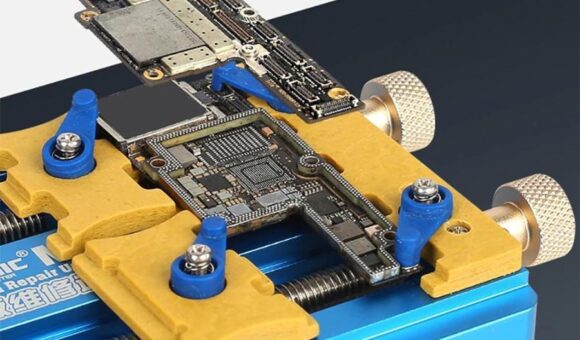
PCB holder: Keeps the motherboard stable during precision work. See how to choose a PCB holder.
Multimeter: Helps investigate electrical faults and verify suitable measurements. Read our guide to choosing a multimeter for mobile phone repair.
Where can you buy soldering consumables in Nairobi?
If you’re restocking your repair workshop, Mutesh Ventures Ltd supplies mobile phone repair tools and equipment in Nairobi, Kenya.
You can explore the Mutesh Ventures catalogue or contact the team to enquire about soldering consumables and other repair equipment.
When making an enquiry, specify whether you’re looking for electronics flux, solder wire, solder paste or another consumable. This helps identify the product suited to your application.
Mutesh Ventures Ltd
Accra Towers, 7th Floor, Shop D3, Kenneth Matiba Road, Nairobi CBD, Kenya.
Phone: 0724 946 622
Email: contact@muteshventures.com
Frequently asked questions
Is flux the same as solder paste?
No. Flux helps prepare metal surfaces for soldering, while solder paste contains solder alloy particles mixed with flux. They serve different purposes.
Can you solder without flux?
Some solder wire contains a flux core, which can provide flux during soldering. However, additional suitable flux may be useful depending on the application and product. Follow the manufacturer’s instructions.
Which solder wire is best for mobile phone repair?
Choose electronics-grade solder wire with an alloy composition and diameter suitable for your repair tasks. Fine-diameter wire can offer better control on small connections.
Is lead-free solder better than leaded solder?
Neither is universally better for every repair. They have different alloy compositions and working characteristics. Consider the board, repair procedure, equipment and applicable safety requirements.
Can solder paste replace solder wire?
Not in every application. Solder paste is designed for specific surface-mount and reflow processes, while solder wire is fed into a joint during soldering.
Does solder paste need refrigeration?
Some solder pastes require refrigerated storage, while others have different manufacturer-specified conditions. Always follow the storage instructions on the particular product.

Add a review
Your email address will not be published. Required fields are marked *