

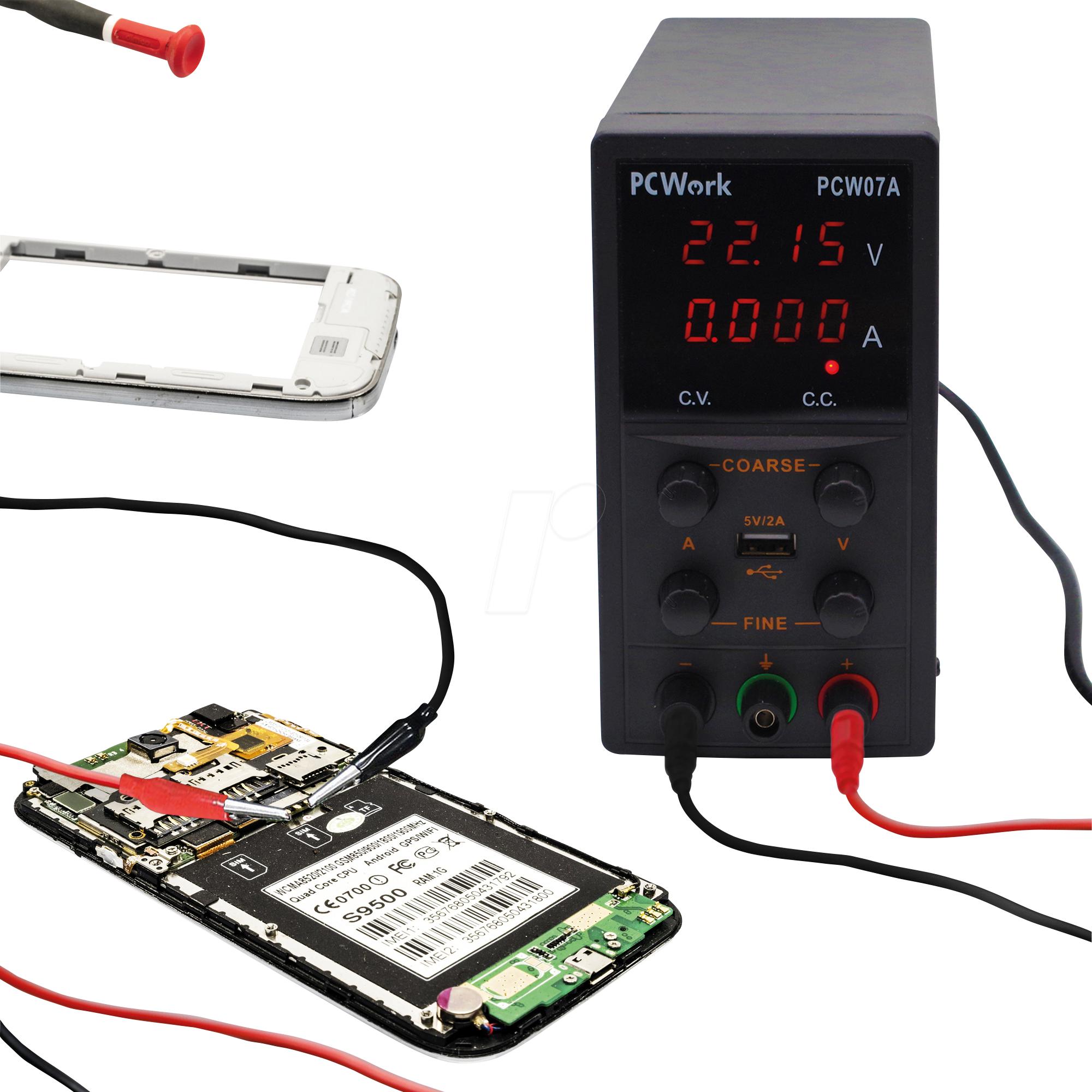
30V 5A vs 15V 2A DC Power Supply: Which One Do You Need?
If you are choosing between a 30V 5A and a 15V 2A DC power supply, the main difference is their maximum output capacity.
A 30V 5A unit can supply up to 30 volts and 5 amps within its rated operating limits. A 15V 2A unit is limited to 15 volts and 2 amps. The higher-rated option offers more flexibility for compatible electronics testing, but that does not automatically make it the right purchase for every technician.
For mobile phone repair, consider the diagnostic work you perform, the adjustment precision you need, the protection features available and your budget.
30V 5A vs 15V 2A: What is the difference?
| Feature | 30V 5A power supply | 15V 2A power supply |
|---|---|---|
| Maximum voltage | 30V | 15V |
| Maximum current | 5A | 2A |
| Maximum theoretical output power | 150W | 30W |
| Capacity | Higher | Lower |
| Suitable applications | Wider range of compatible electronics testing | Basic and lower-power electronics testing |
| Workshop flexibility | Greater | More limited |
| Typical consideration | Technicians needing more output capacity | Beginners or technicians with simpler requirements |
The maximum theoretical output power is calculated by multiplying voltage by current. Actual usable output depends on the power supply’s design and operating limits.
1. What does 30V 5A mean?
A 30V 5A DC power supply has a maximum rated output of 30 volts and 5 amps.
Its theoretical maximum output power is:
30V × 5A = 150W.
This gives the technician more output capacity for compatible electronic circuits and testing applications.
For a mobile phone repair workshop, a 30V 5A supply may be a practical choice if you handle motherboard diagnostics, work with different electronic devices or want equipment that can support a wider range of bench-testing tasks.
However, higher capacity does not mean you should apply 30 volts or 5 amps to a smartphone. Always follow the correct voltage and current settings for the specific device and diagnostic procedure.
2. What does 15V 2A mean?
A 15V 2A DC power supply has a maximum rated output of 15 volts and 2 amps.
Its theoretical maximum output power is:
15V × 2A = 30W.
It may be sufficient for basic electronics testing and applications that fall within its output limits.
For a beginner setting up a small repair bench, a 15V 2A supply may be a reasonable starting point if its specifications match the intended work.
The limitation is its lower output capacity. As your workshop takes on more varied electronics work, you may find that a higher-rated supply offers greater flexibility.
3. Which power supply is better for mobile phone motherboard repair?
For a technician who regularly handles motherboard diagnostics, a well-designed 30V 5A bench supply generally offers more flexibility than a basic 15V 2A model.
However, maximum output is only one consideration. Look for:
- Adjustable voltage and current.
- Accurate voltage and current readings.
- Constant-voltage and constant-current modes.
- Fine adjustment controls.
- Appropriate short-circuit and overload protection.
- Stable output and reliable construction.
A lower-rated supply with better control and accuracy may be more useful for a particular diagnostic task than a poorly designed higher-rated unit.
If you are still deciding which specifications matter most, read our guide on how to choose a DC power supply for mobile phone repair.
4. Does a 30V 5A power supply force more current into a phone?
No. A power supply rated at 5A does not automatically push 5 amps into every connected device.
The current drawn depends on the connected load, the applied voltage and the circuit’s electrical characteristics. The current-limit setting determines the maximum current the supply is allowed to deliver under its operating conditions.
This distinction is important for phone repair. A technician must select the correct voltage and current limit for the specific test rather than relying on the maximum ratings printed on the machine.
Incorrect settings or polarity can damage sensitive components.
5. Which one should a beginner buy?
If you are starting a phone repair workshop, your choice should depend on the work you intend to handle.
A 15V 2A supply may be adequate for basic, lower-power testing. It can help you get started without immediately investing in a higher-capacity unit.
A 30V 5A supply is worth considering if you expect to handle more varied electronics work and want additional output capacity.
Before purchasing either model, compare its accuracy, protection features, controls, warranty and build quality. Do not make the decision based on voltage and amperage alone.
6. Is a 30V 5A supply always worth the extra cost?
Not necessarily.
If your work only requires applications within the limits of a 15V 2A supply, paying more for a 30V 5A model may not deliver much practical value.
On the other hand, if your workshop handles different electronics and more demanding bench-testing tasks, the additional capacity can make the higher-rated model a more useful long-term investment.
Think about the repairs you currently perform and the services you plan to introduce. Buy equipment that supports those requirements rather than paying for specifications you will rarely use.
7. Other equipment to consider for your diagnostic bench
A DC power supply is only one part of a mobile phone repair workstation.
Depending on the repairs you perform, you may also need:
- A reliable multimeter for checking voltage, resistance and continuity.
- A soldering station for component-level repair.
- A hot air rework station for suitable component removal and installation.
- A microscope for inspecting small components and solder joints.
- Suitable motherboard holders and work mats.
For related buying advice, explore:
- Best soldering stations for mobile phone repair in Kenya
- Hot air rework station vs soldering station: What’s the difference?
- How to choose a soldering station for mobile phone motherboard repair
- How to choose a hot air rework station for phone repair
- 2-in-1 hot air and soldering station vs separate machines
You can also explore the Mutesh Ventures equipment catalogue for repair tools and workshop equipment.
Frequently asked questions
Is 30V 5A better than 15V 2A?
A 30V 5A supply offers higher maximum voltage, current and theoretical output power. It is more flexible for compatible applications, but the best option depends on your actual testing requirements.
Can I use a 30V 5A power supply for mobile phone repair?
Yes, a suitable regulated 30V 5A bench supply can be used for mobile phone repair diagnostics. Always select the correct output settings for the device and test procedure. Never apply the maximum rated output indiscriminately.
Is 15V 2A enough for phone repair?
It can be sufficient for some basic and lower-power electronics testing. Whether it is adequate for your phone repair work depends on the procedures and equipment you intend to use.
How do I calculate the wattage of a DC power supply?
Multiply the maximum voltage by the maximum current. For example, 30V × 5A gives 150W, while 15V × 2A gives 30W. This is the theoretical maximum based on the stated ratings.
Should I buy a 30V 5A power supply if I am a beginner?
It can be a good investment if you have the budget and expect to handle a wider range of electronics work. However, learn correct voltage selection, polarity and current limiting before using it on sensitive circuits.
Find mobile phone repair equipment in Nairobi
Whether you need a basic bench supply or a higher-capacity model, choose equipment that supports the work you perform and gives you reliable control during diagnostics.
Mutesh Ventures Ltd supplies mobile phone repair equipment and tools to technicians, repair shops and electronics businesses in Kenya.
Visit Mutesh Ventures to explore the available equipment or contact the team to enquire about DC power supply models and current availability.
Mutesh Ventures Ltd
Accra Towers, 7th Floor, Shop D3, Kenneth Matiba Road, Nairobi CBD, Kenya
Phone: 0724 946 622
Email: contact@muteshventures.com

Add a review
Your email address will not be published. Required fields are marked *