

Best Microscopes for Mobile Phone Motherboard Repair: A Buyer’s Guide
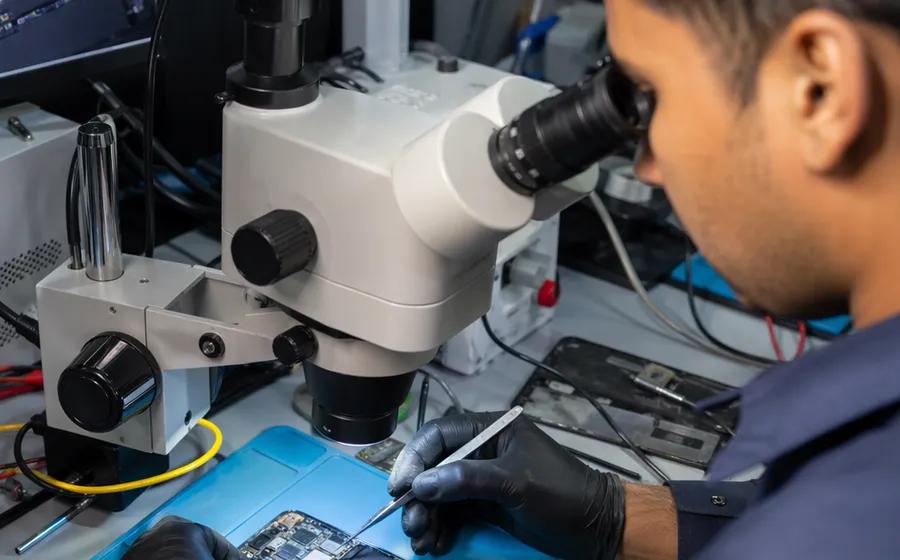
A microscope is an essential tool for mobile phone technicians who perform motherboard repairs, micro-soldering and other precision electronics work. It provides magnification that makes it easier to inspect small components, solder joints, connectors and circuit-board damage that may be difficult to see with the naked eye.
The best microscope for phone repair depends on the type of work you perform, your budget, the magnification you need and how comfortably you can work under it.
For most technicians doing regular motherboard-level repairs, a stereo microscope is a practical choice because it provides depth perception and a three-dimensional view of the work area. Digital microscopes are also useful, particularly when you want to display and capture images on a screen.
This guide explains the main microscope types, features and buying considerations for mobile phone repair technicians in Kenya.
Why do mobile phone repair technicians need a microscope?
Modern smartphone motherboards contain small components packed closely together. Some faults are difficult to identify without magnification.
A microscope helps technicians:
- Inspect small solder joints and component connections.
- Identify corrosion and physical damage.
- Examine connectors and fine-pitch components.
- Position soldering tools more accurately during micro-soldering.
- Inspect work after component replacement.
- Examine PCB tracks and pads during motherboard repairs.
Magnification improves visibility, but it does not replace good lighting, proper soldering technique or electrical testing.
1. Understand the different types of microscopes
Not all microscopes are designed for the same work. The three common options to consider are stereo microscopes, digital microscopes and compound microscopes.
Stereo microscopes
A stereo microscope provides a three-dimensional view of the object being examined. This depth perception is useful when positioning soldering tools, handling small components and performing motherboard repairs.
Advantages include:
- Depth perception for precision work.
- A natural view through eyepieces.
- Space to work with tools beneath the objective lens.
- Suitability for component inspection and micro-soldering.
A stereo microscope is often a strong choice for technicians who spend significant time working directly on smartphone motherboards.
Digital microscopes
A digital microscope uses a camera and displays the magnified image on a monitor or screen.
Advantages include:
- A larger viewing display.
- Ability to capture photographs or video, depending on the model.
- Convenient viewing for demonstrations and training.
- Reduced need to look continuously through eyepieces.
However, some digital microscopes provide less natural depth perception than stereo microscopes. Check the working distance, image quality, latency and controls before buying one for precision soldering.
Compound microscopes
Compound microscopes use optical magnification to examine very small specimens, usually at higher magnifications.
They are useful in laboratory and scientific applications, but many conventional compound microscopes are less convenient for hands-on motherboard repair because they may not provide the working space needed for soldering tools.
For most phone repair benches, a stereo or suitable digital microscope is generally more practical.
2. How much magnification do you need?
Magnification is one of the first specifications technicians consider when choosing a microscope. However, higher magnification is not always better.
For motherboard repair, you need enough magnification to see small components clearly while retaining a useful field of view and sufficient working distance.
Consider these factors:
- Low magnification: Provides a wider view for locating components and inspecting larger sections of a board.
- Medium magnification: Useful for examining solder joints, connectors and small components.
- Higher magnification: Helps inspect finer details, but reduces the visible area and can make positioning tools more difficult.
The useful magnification range depends on the microscope’s optics, objective lens, eyepieces and any additional lens or camera system.
Do not judge a microscope by its advertised maximum magnification alone. Ask to see the image at the magnification you intend to use.
3. Check the working distance
Working distance is the space between the microscope’s objective lens and the object being viewed.
This is especially important for mobile phone motherboard repair because you need room for soldering irons, tweezers, hot air tools and other accessories.
A microscope with insufficient working distance can make it difficult to position tools comfortably.
Before buying, consider:
- Whether your soldering iron can reach the work area.
- Whether tweezers and other tools fit beneath the lens.
- Whether the microscope can accommodate the height of your motherboard holder.
- Whether the lens provides enough clearance for your preferred repair technique.
A practical microscope should give you both a clear image and enough room to work.
4. Choose a microscope with suitable lighting
Good illumination is essential when examining motherboard components.
Poor lighting can create shadows, hide surface defects and make it difficult to distinguish small solder joints.
Look for a microscope that supports suitable LED illumination. Depending on the model, lighting may be built into the microscope or supplied through a separate ring light.
Useful considerations include:
- Adjustable brightness.
- Even illumination across the work area.
- Minimal glare from reflective surfaces.
- Lighting that does not produce distracting shadows.
- A light source that remains comfortable during extended work.
Some technicians also use auxiliary lighting to improve visibility when working with reflective solder and metal components.
5. Optical microscope vs digital microscope: Which is better?
The choice depends on how you prefer to work.
| Feature | Stereo optical microscope | Digital microscope |
|---|---|---|
| Viewing method | Eyepieces | Screen or monitor |
| Depth perception | Natural stereoscopic view | Depends on camera and display system |
| Tool positioning | Direct optical view | Requires attention to screen and tool position |
| Image capture | Depends on camera attachment | Often supported |
| Shared viewing | Requires additional setup or camera | Convenient on a shared screen |
| Best suited to | Hands-on precision repair | Inspection, demonstrations and documentation |
For technicians who regularly perform micro-soldering, a stereo microscope is often a practical starting point. A digital microscope may be preferable if screen viewing and image capture are important to your workflow.
6. Check the stand and stability
A microscope is only as useful as the setup supporting it.
A stable stand helps keep the image steady while you work. Movement or vibration can make precise soldering more difficult.
Before purchasing, consider:
- Stand stability.
- Height adjustment.
- Available workspace beneath the microscope.
- Ease of positioning the viewing head.
- Compatibility with your repair bench.
- Whether the stand can accommodate the motherboard holders you use.
A boom stand may provide more flexibility for positioning equipment over a larger work area, while other stands may be more suitable for compact benches.
7. What else do you need for a microscope repair station?
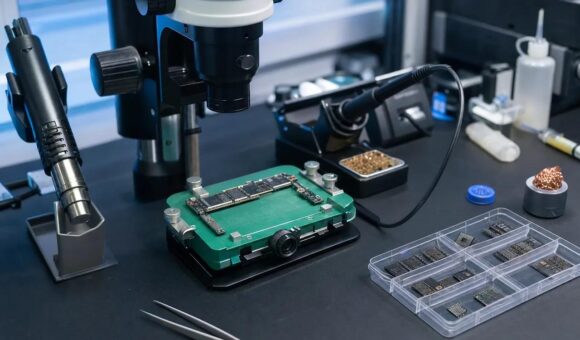
A microscope works best as part of a properly organised motherboard repair bench.
Depending on the work you perform, consider combining it with:
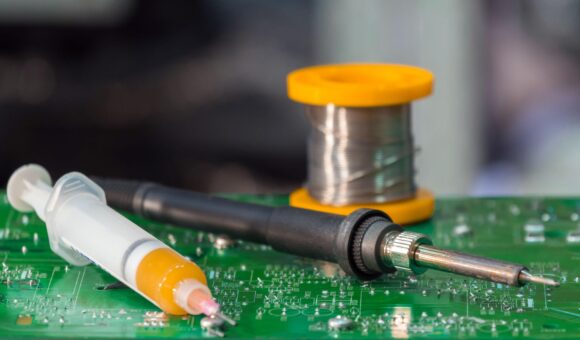
- Soldering station: For controlled soldering and component replacement.
- Hot air rework station: For suitable component removal and installation.
- DC power supply: For controlled power testing and current-consumption observation.
- Digital multimeter: For voltage, resistance, continuity and diode testing.
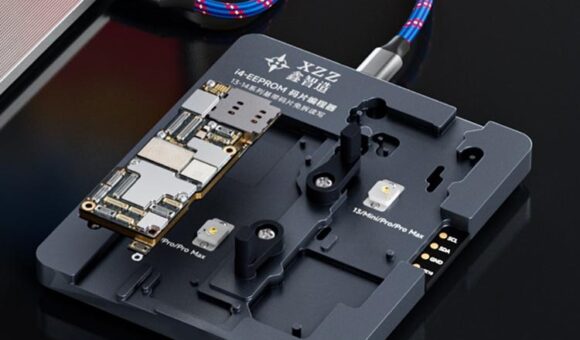
- PCB holder: To keep the motherboard stable during precision work.
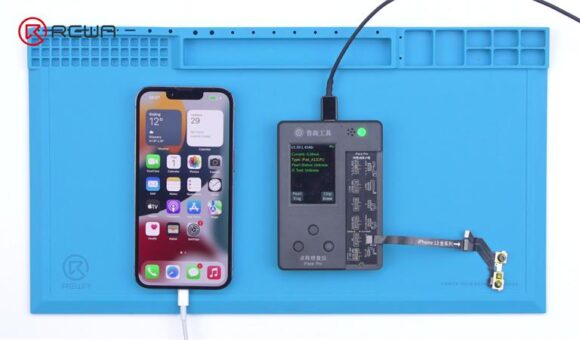
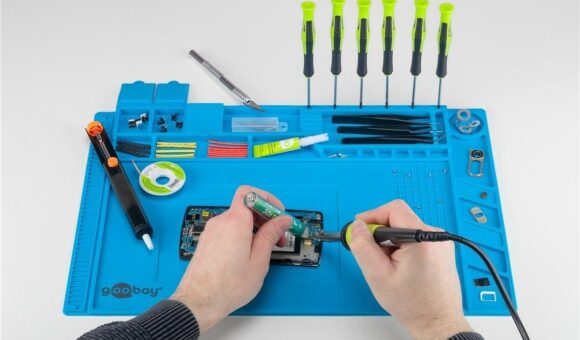
- Soldering mat: To organise the work area and provide a suitable bench surface.
For further equipment guidance, explore our related guides:
- Best soldering stations for mobile phone repair in Kenya
- How to choose a soldering station for mobile phone motherboard repair
- How to choose a hot air rework station for phone repair
- How to choose a DC power supply for mobile phone repair
- Best multimeters for mobile phone repair technicians
8. Common mistakes when buying a microscope
Choosing the highest advertised magnification: Maximum magnification alone does not determine image quality or suitability for soldering.
Ignoring working distance: A microscope may offer a clear image but leave too little room for your tools.
Overlooking lighting: Poor illumination can make precision work unnecessarily difficult.
Buying an unstable stand: Movement can interfere with accurate component handling.
Ignoring your repair workload: A technician who performs occasional inspections may not need the same setup as someone doing motherboard-level micro-soldering every day.
Choosing digital magnification without checking image quality: Confirm the actual image clarity, display performance and working distance rather than relying on advertised digital zoom.
Frequently asked questions
Which microscope is best for mobile phone motherboard repair?
A stereo microscope is a practical option for many motherboard repair technicians because it provides depth perception and working space for soldering tools. A suitable digital microscope is another option, particularly when screen viewing and image capture matter.
Is a digital microscope good for micro-soldering?
It can be, provided it offers a clear image, suitable working distance, stable display performance and comfortable tool positioning. Check whether its depth perception and viewing arrangement suit your repair technique.
How much magnification do I need for phone repair?
The appropriate magnification depends on the components and repair work. A useful microscope should allow you to inspect fine details while retaining enough field of view and working distance to position your tools.
Why is working distance important?
Working distance determines how much space is available between the microscope lens and the motherboard. Enough clearance is essential for using soldering irons, tweezers, hot air tools and motherboard holders.
Do I need a microscope for basic phone repairs?
Not every repair requires one. Screen replacements, battery replacements and some basic repairs may not need microscope-level inspection. However, motherboard troubleshooting and micro-soldering benefit significantly from magnification.
Can a microscope identify a short circuit?
No. A microscope helps you visually inspect a motherboard for damage, corrosion and component-related issues. Electrical tools such as multimeters and DC power supplies are needed to investigate electrical faults.
Find mobile phone repair microscopes in Nairobi
A suitable microscope can make a significant difference when working on small smartphone motherboard components. Choose a setup that provides clear magnification, sufficient working distance, stable positioning and good illumination.
Mutesh Ventures Ltd supplies mobile phone repair equipment and workshop tools in Kenya, including microscopes, soldering stations, power supplies, stencils, adhesives and other repair essentials.
Explore the Mutesh Ventures equipment catalogue or contact the team to enquire about available microscopes and suitable workshop equipment.
Mutesh Ventures Ltd
Accra Towers, 7th Floor, Shop D3, Kenneth Matiba Road, Nairobi CBD, Kenya
Phone: 0724 946 622
Email: contact@muteshventures.com
Add a review
Your email address will not be published. Required fields are marked *